
I Spent 15 Years Living with Anorexia. Here's What Changed My Understanding of Mental Illness.
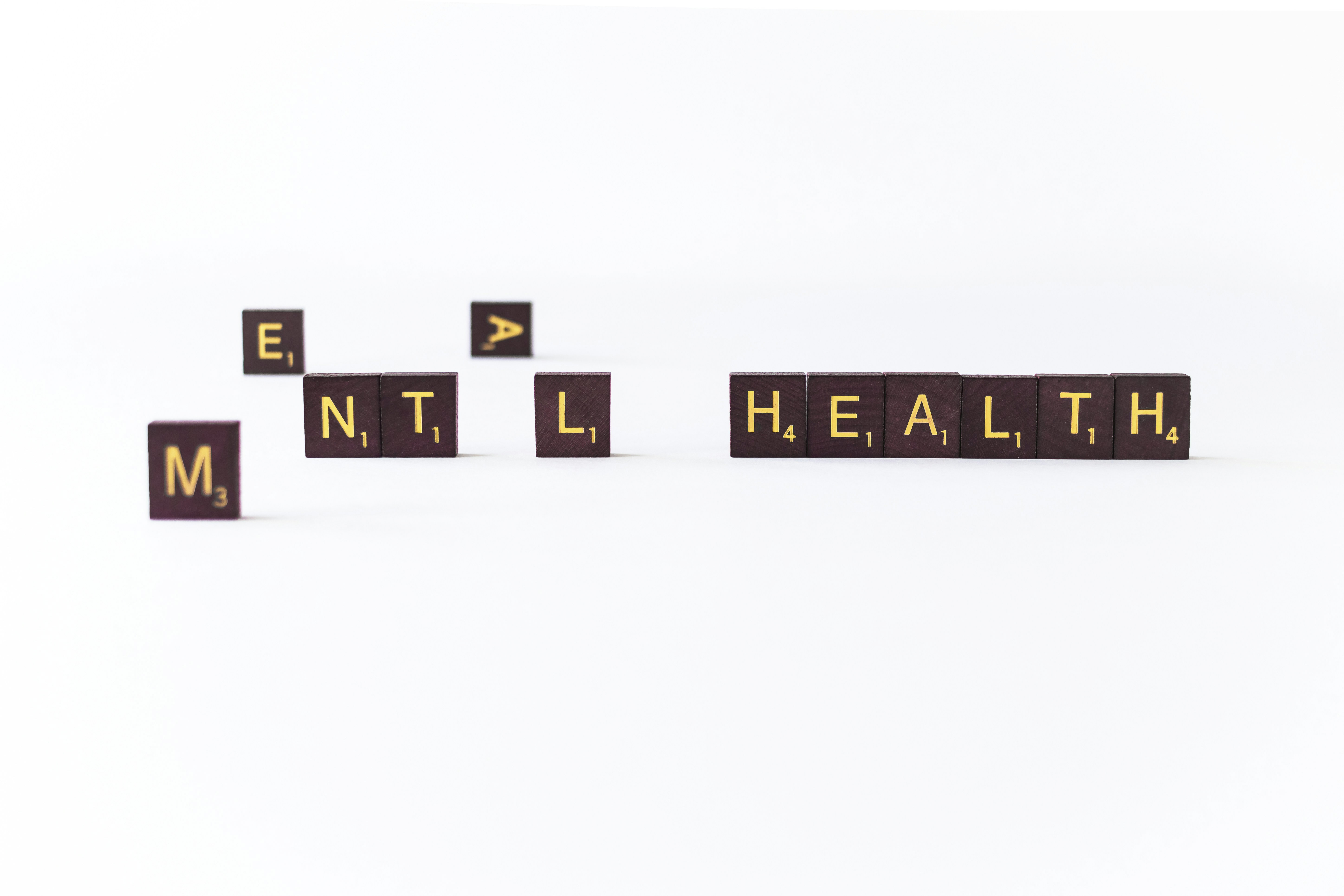
A recent conversation about euthanasia, of all things to chat about over lunch at a cosy café, got me thinking about the way we think about and therefore treat mental health issues.
Let me explain. The conversation, in a nutshell, entailed eachof us sharing our surprisingly different views and opinions on whether wethought euthanasia was something that should be an option or not.
I shared that I thought of it as something largely positive. I feel that there would be many unique circumstances and situations where there would be potential value in people having control over the option to end their life.
As the conversation continued, I found myself thinking about the grey areas and situations where there is potential for it to go “wrong”.
It wasn’t long before I found myself thinking about a past version of myself.
A version of myself who was suffering. Suffering to a degree to which I still have no words.
I realised that had I been given the option to end my life throughout many moments of the fifteen years I lived with anorexia nervosa I’d have chosen it (I wouldn’t have been given this option. This was just my train of thought).
I’d have chosen it because I didn’t see a way out. I’dbattled my mind relentlessly 24/7 for fifteen years. I didn’t see how thingscould improve. People in my life didn’t see how things could improve.
It wasn’t me vs anorexia. I was an illness.
Knowing the life I now live, what I was able to overcome, what I was able to create and who I was able to become it’s an uncomfortable thing to know that past versions of me who couldn’t have imagined that the now version of me was possible would have ended it all, and never known.
And it got me thinking a little deeper about something I take as a given now but perhaps might be a new way you might not have considered to think about recovery from mental illness if you’re currently struggling with your mental health.
Mental Illness vs Opportunity to Grow

I’m not going to beat around the bush on this one or ease into it. The truth is we predominantly treat mental health issues as though they are inherent and fixed “flaws”. We largely focus on understanding what’s “wrong” and how to live with it or what we call “maintenance”. Treatment is predominantly aimed not so much at overcoming those issues but in learning to better cope with them.
Suffer, but build your ability to cope within the suffering.
We tell people it’s a deficit in their mind or somethingthey’re body is doing incorrectly (think chemical imbalances etc) but we offervery little that is solid and trustworthy in the way of what to do to overcomethat deficit or correct those chemical imbalances (that is long-term and in atruly empowering way that goes beyond the temporary relief).
Having witnessed both sides of mental health treatment both asa patient of fifteen years (!!!) as well as a dietitian and clinicalhypnotherapist working in mental health for going on ten years now, I canhonestly say the way we think about, train in and treat those living withmental health issues is severely lacking.
It’s not lacking in theory, advice, medication andeducation. It’s even becoming less lacking in compassion and acceptance then itused to be.
But it is lacking immensely in empowerment.
I do not think this is brand new information. I think many are aware of this. Many patients, parents, carers and health professionals acknowledge that mental health treatment often isn’t filled with hope, skill acquisition, confidence, development of steadfast self-worth and solid progress but don’t know what to do to make it more so…
What else can be offered? What else can be done to help people who appear so stuck and often self harming?
I’m going to make some suggestions because we can do so muchbetter. And rather than simply leaving it at shouting “we need to do better”without offering any kind of real indication as to what that “better” is I wantto offer an improvement I see as valuable (if not a game changer).
A suggestion that may not make everyone happy because itwill challenge beliefs around mental illness and not everyone will get it andmight even feel uncomfortable to consider at first. But having gone fromsomeone who would have willingly surrendered my life had that been an option tosomeone who has every desire to live as long as possible, I will be forevergrateful that the help I eventually found for my mental health struggles, afterfifteen years of trying to recover, treated me as if this better future Icouldn’t connect to was possible. More importantly they guided me to developthe skills I needed to make that better future a reality.
In order for things to change, for recovery rates to improve someone has to speak about these uncomfortable topics. Because behind each and every one of the statistics we use to describe those that recover and those that never recover are human lives. Human lives that I get to meet, get to know, get to care about each day in the work that I do.
So, what is my controversial take on mental health issues?
It’s this - could mental health issues sometimes be lookedat more as a lack of skills, resources or capabilities than illnesses?
Could mental health issues sometimes be treated as more of lack of development of skills, resources or capabilities than illnesses?
And then simply work on improving those skills, resources and capabilities (instead of downplaying them, ignoring them or learning yet more momentary relief, coping or distraction techniques).
How This Would Change Things (for so Many Unique Individuals and Society)

I want you to consider for a moment what treatment would look like if we were to truly think about and treat mental health issues from this understanding?
For starters we would get clear on what it was you were struggling with, what it was you wanted to change, what it was that was getting in the way of doing/having/being that now and then do our darndest to overcome and develop the skills, resources and capabilities to overcome what is getting in the way and free you up to do/feel and be something different.
Essentially to recover in the same way someone recovers froma broken bone. By working with their body and taking the actions, we know work.
Shifting mental illnesses from perpetual illnesses and invisible suffering to “an opportunity to learn, grow and develop what’s been missing or lacking” opens up room for change.
And change is the whole point.
It gives room for life on the other side of the mentalhealth challenge vs it being a life sentence.
Having worked with thousands of people from all over the world dealing with all sorts of mental health issues I can tell you with absolute certainty that in each and every case they deserve real freedom and the ability to experience life on the other side of that issue.
They deserved to become empowered and live and function attheir best (which is unique and different for each of us).
Not simply manage and cope forever.
My Journey
When I look back at the version of me who was struggling with a swathe of mental illnesses from anorexia nervosa, to depression, to anxiety, to OCD, to self-harm, to suicide ideation and beyond if that was my life sentence and most of my week was taken up by “treatment” where I sat in a depressing grey room and talked about all my limitations and flaws while feeling immense shame at my inability to do anything different (“just eat”) or in other rooms had my body poked, prodded and coldly scrutinised I’d have supported my decision to choose euthanasia.
Knowing what I know now, that all the things I was struggling with were simply a reflection of the skills, resources and capabilities I hadn’t yet developed or had started to doubt and knowing what Iknow now that all these skills, resources and capabilities are all things that can be developed I’d never have supported my decision to choose euthanasia.
What Do I Really Mean by “Skills, Resources and Capabilities”

What am I talking about specifically when I talk about developing skills, resources and capabilities to overcome and no longer struggle with mental illness?
Well, I’m largely talking about something that we can go our whole lives not knowing. That in the same way we have very conscious skills, resources and capabilities such as how to learn how to brush our hair, do a backflip, do our tax or read a book we also have unconscious skills, resources and capabilities.
I’ll use an example to explain what I mean by this. You’ve likely noticed that there is someone or some people in your life who appear more confident within themselves, they have a certain something where the judgments of others affect them less and they’re able to let go of or completely ignore the criticism of others and carry on their path of life and you’ve likely noticed if you think about it there is someone or some people in your life who seem to be insecure, worry about and deliberate over the opinions and judgments of others. Both are versions of the unconscious skill of “confidence”.
If you find yourself being the insecure one, the perfectionist, the people pleaser, the poor boundary setter, then “confidence” is a skill that you would likely benefit from developing. We’re not talking the “peacocking fake it till you make it confidence” we’re talking the gentle and solid trust within yourself that you can rely on yourself even in the face of challenges or the (inevitable and real) judgement of others.
Some people are lucky enough to learn these unconscious skills to a degree that benefits them in life and allows them to succeed and function at their best without necessarily being aware or having to put any conscious effort to do so as they go throughout life, some people do not and others have experiences where they start to doubt themselves and lose these capabilities.
The good news is if you didn’t chance great confidence or self-worth development that’s ok because you do not have to leave it up to chance. You can deliberately learn any of the unconscious skills. You don’t have to stay stuck in however they turned out by default. But and this is a big but and what I truly see as being left out of most mainstream mental health treatments we currently offer you cannot develop them entirely consciously.
What do I mean by this? Let me use the example of confidence again. You cannot develop genuine and authentic confidence by understanding that you lack self-confidence, reading a book on it or educating yourself about what self-confidence is, decide it’s something you want to do and then do it. It’s an unconscious skill and for it to be a truly useful skill it must be unconscious. This is where working with a health professional who has a deep understanding of how human minds work and has the skills to work with the unconscious mind (for example a Clinical Hypnotherapist or an NLP practitioner) can help. Help beyond what you may have ever imagined possible.
This is the game changer in mental health treatment. We’ve traditionally focused all our attention on the 3-5% of our mind that is our conscious mind, all the wonderful information, knowledge, insight and wisdom we have but we’ve severely lacked to know how to or sometimes even acknowledge that this leaves out the vast majority of the resources of our mind, the 95-97% that makes up the unconscious. When we work with the two, we help people become whole, integrated and empowered in their own lives. We open up real room to move, to breathe, to choose and to change.
Summary

This may be a controversial way of looking at our mental health struggles and I appreciate that it’s not for everyone.
However, if you’re stuck or curious to learn how to work with instead of fight against your mind and genuinely develop the very real and very learnable skills of letting go, self-forgiveness, genuine self-confidence, flexibility versus perfectionism, self-trust and emotional regulation then this is the difference in what I offer.
I don’t offer staying in your “problems”, “maintenance” or “relapse prevention strategies”.
I offer a means of developing all the skills, resources and capabilities you’re struggling with that should you develop them or improve them it simply becomes impossible to do the anxiety or eating disorder in the way that once felt like your default. It opens up choice where there used to be compulsion.
So, if you’re genuinely curious to experience your mind in new and different ways, increase your unconscious and conscious skills, resources and capabilities to gain real freedom, choice and control over not only your relationship with food and your body but also your life send me an email or book in a time for an obligation free “Clarity Call”. This is your opportunity for me to spend about half an hour getting to know you (and for you to get to know me) and decide if this deeper practical work is what you’re looking for.
If you’re done suffering, feel like you’ve tried everything or have been lost for what else to do this is your personal invitation to an opportunity to do things differently this time.
Similar articles



It’s Possible to Feel Free Again
If you're ready to make peace with food, your body and your mind - let's talk
Bonnie works with a limited number of clients each month to ensure depth and lasting change.