Why Is My Hair Falling Out?

Hair health is tightly linked to nutrition and if you’ve noticed your hair falling out far more than usual this can be one of the first indicators that you may have a nutritional deficiency or imbalance.
Why is hair loss one of the first signs that something is up with your nutrition? Because your hair is non-vital (not crucial to life) which means your body can do without it. Therefore, when you have a short supply of a nutrient or nutrients needed for hair growth and for vital functions your body chooses to divert the nutrient/s where they are needed most (aka your vital processes). Unfortunately, this means your hair can suffer, fortunately, this also means your bones, brain, heart, nerves and wherever else needed those nutrients suffer less. When you look at it in this way it seems like a logical and reasonable trade off, yet I know how disturbing it is to experience fistfuls of your hair falling away in the shower…
Which is why today’s post is about identifying the nutrient/s you may be lacking and some examples of foods you can eat to up these nutrients that may stop you from losing any more hair and support your healthy hair growth.

Before we get into any of the specific vitamins or minerals that have been shown to cause hair loss if there’s a deficiency, I feel the need to start at what’s most important and that is protein and energy. If you are not eating enough nourishing foods to meet your protein and energy needs, it doesn’t matter how many vitamins and minerals you are consuming your hair is going to continue to fall out.
This is because your hair is made of protein (keratin)
and the cells right at the base of your hair in what’s called the ‘follicle bulb’ have a very fast turnover which means they churn through a great deal of energy quickly. In order to keep this up to a healthy level these cells need a consistent and reliable supply of both adequate energy to continue to regenerate and protein to continue to build otherwise they simply can’t.
It is common for people who go on intensive weight loss programs or ‘crash diets’ to experience sudden hair loss
. This is due to the severe caloric restriction and consequent inadequate energy supply to the hair follicles (of which you have about 100 000 on your head so that’s a whole lot of hair asking for energy!).
At any one time the vast majority of your hair strands are in the growth phase (known as the anagen phase) of their lifecycle which means they are growing and not falling out. To remain in this continuous growth phase and not fall out requires above all else energy and protein. However, if you’re fairly certain you’re meeting your energy and protein needs and your hair is still falling out it’s worth taking a look at your vitamin and mineral
intake.
Vitamins & Minerals
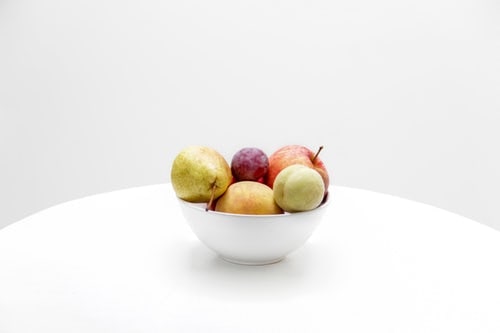
Vitamins and minerals are essential for the normal growth and function of all the cells within your body. Therefore, when you’re lacking in any there’s abundant flow on effects one of which can be hair loss. The major vitamins and minerals which play a role in your hair health are those involved in the cellular turnover in the follicle bulb because these are cells which are rapidly dividing
and they are:
1. Iron
It is a common finding for women with hair loss to be iron deficient
What Foods Contain Iron?

2. Zinc
Brittle hair and hair loss can both be symptoms of zinc deficiency
.
What Foods Contain Zinc?

3. Biotin
A deficiency in the vitamin biotin can cause hair loss. It is rare that a biotin deficiency would be the cause of your hair loss as biotin deficiency is rate
What Foods Contain Biotin?
Many foods contain some biotin12,17. Some examples of foods that contain the most biotin are:
Can I Just Take Supplements?
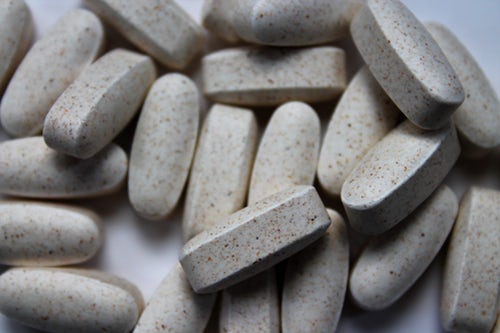
While supplements have a place, they are not our first port of call because they are often not the best means of meeting your body’s needs. Supplements are of use is if you are severely deficient in any vitamins or minerals such as if you have been diagnosed with iron deficiency anaemia then it is important to take iron supplements. However, taking supplements is not in most cases a lifelong strategy but rather a valuable tool to get your body back on track while you learn which foods and how much to eat to ensure you meet your needs.
If your hair is falling out more than usual, there are a number of reasons supplements are not necessarily your best choice a couple of which I will touch on here. Firstly, there is a risk for toxicity when taking supplements which is highly unlikely (virtually impossible) when consuming wholefoods. For example, excessive intakes of boron, selenium and vitamin A toxicity have been reported to cause hair loss. Secondly, there is no evidence to support that supplementation with any of the above vitamins or minerals will prevent hair loss if you are not deficient in them and there is not enough evidence to recommend individual amino acids or algae supplements to treat hair loss
.
Take Home Messages
As you can see there are a wide variety of foods which contain each of these hair healthy nutrients (iron, zinc and biotin) so one of the best things you can do for the health of your hair (and the health of your body) is increase the variety of different foods you eat. Increasing your intake of one or all of these nutrients will only help if it is your lack of one of these nutrients which is causing your hair loss. That is while you can experiment with increasing foods or supplements with these nutrients if they are not the cause of your hair loss doing so won’t stop your hair falling out. To identify and correct the issue as quickly as possible rather than trial and error with your health I’d encourage you to see a dietitian.
While the nutrients covered within this post are great places to start what you must remember is your life is part of a whole and it is unlikely that one nutrient alone is the sole cause of your hair loss. If your hair is falling out it is far more likely that there are a number of things contributing perhaps including stress and I strongly encourage you to see a dietitian because if you are lacking in any of these key nutrients it is likely you are lacking in others. This means that there is far more at risk here than the health of your hair because the health of your entire body relies on the nutrients you eat.
If your hair is falling out more than usual it really is worth seeking the facilitation of a great dietitian and getting the information and support you need because it may only take some simple little alterations where you may never have thought to make them in order to stop your hair falling out, change your health and truly your entire experience of life.
With my whole heart I trust you found this information useful and inspiring

Become Great. Live Great.
Bonnie.
Reference

Similar articles


It’s Possible to Feel Free Again
If you're ready to make peace with food, your body and your mind - let's talk
Bonnie works with a limited number of clients each month to ensure depth and lasting change.